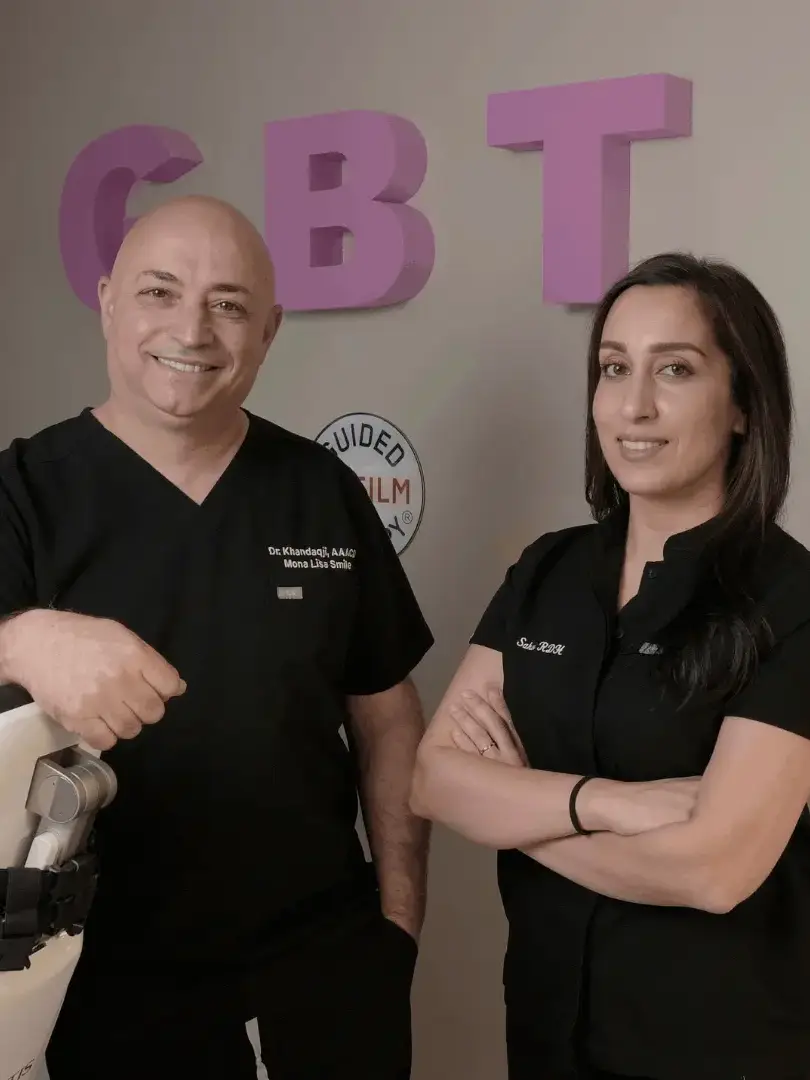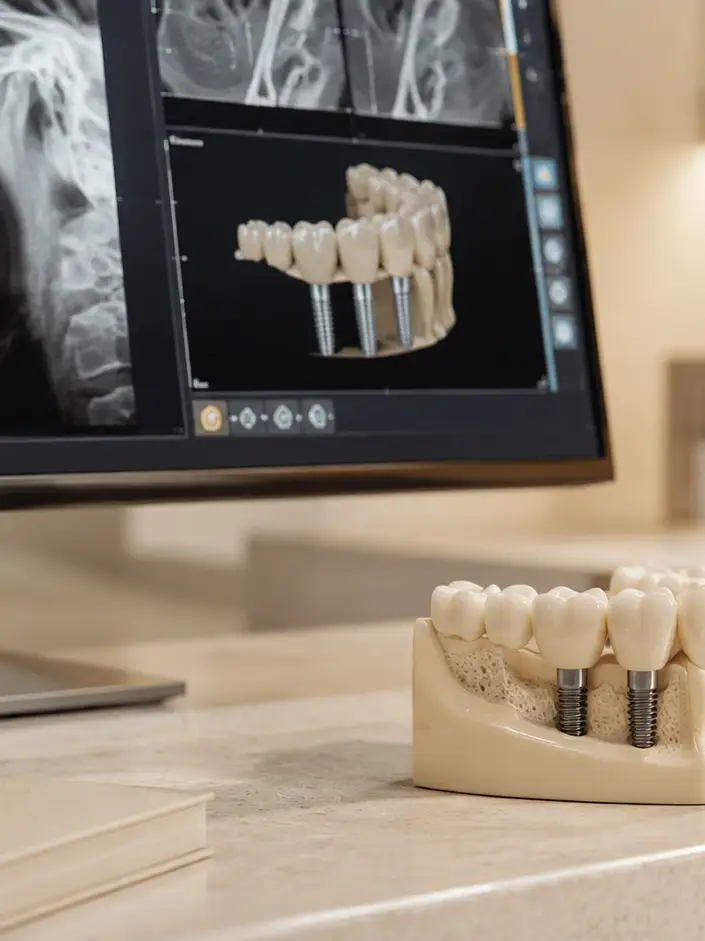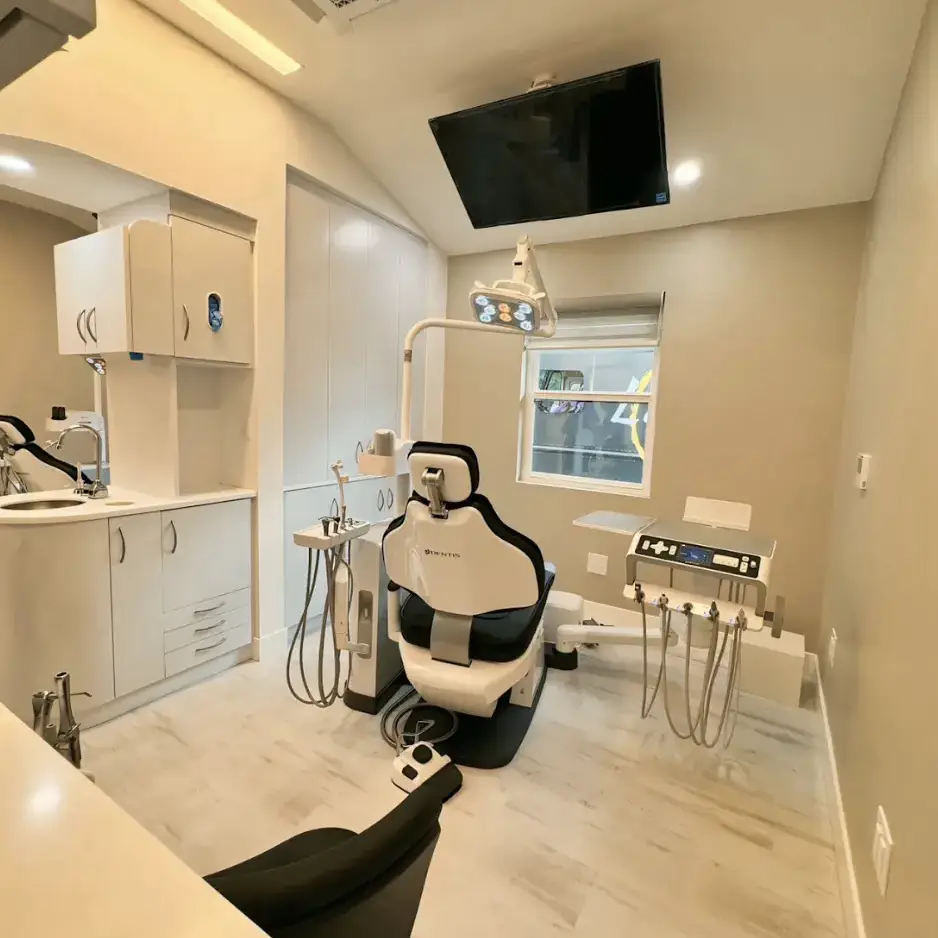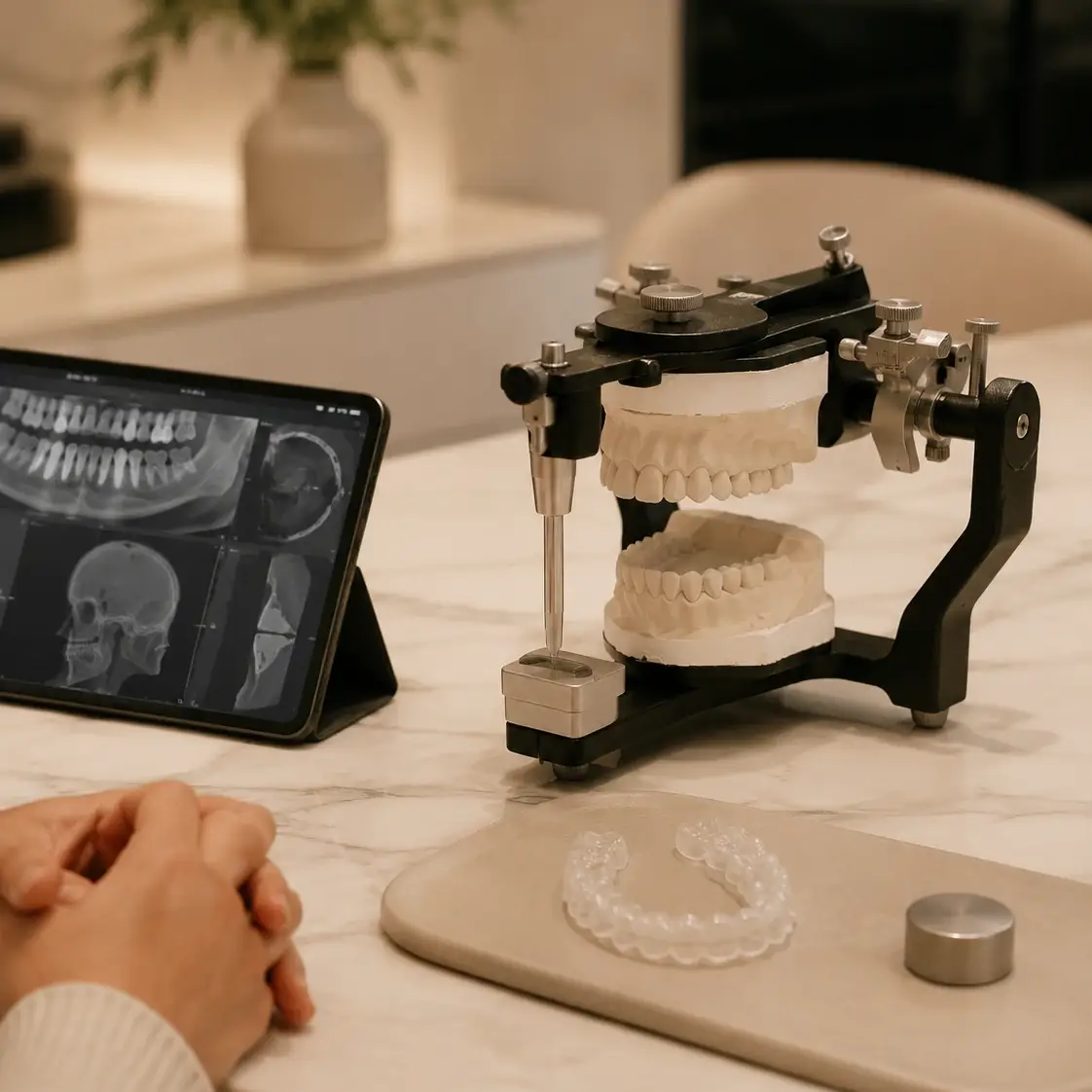
A state-of-the-art treatment room at Mona Lisa Smile Dental in Walnut Creek, featuring advanced technology for prosthodontic procedures.

Dental Implants in Walnut Creek, CA

In Walnut Creek, residents stay active and value long-term health, and that includes their smiles. When a tooth goes missing, the priority is a replacement that looks natural, functions under real bite force, and preserves jawbone integrity over time.

At Mona Lisa Smile Dental on Olympic Blvd, we provide the full scope of dental implant services. That includes single tooth implants, implant-supported dentures, bone grafting, tooth extractions with socket preservation, full mouth reconstruction, and final crown restorations. Every phase of treatment happens here, from initial 3D imaging through final prosthetic placement.

This page covers each of those services in detail: what’s involved, who benefits, and what the process looks like from start to finish. Whether you’re coming from Rossmoor, the downtown core, or neighboring cities like Lafayette and Orinda, you’ll find the information you need to make an informed decision.

Hear From Our Patients:

A single tooth implant is the most common implant procedure we perform, and for good reason. When one tooth is lost to decay, fracture, or infection, a tooth implant provides a standalone replacement that doesn’t require altering adjacent healthy teeth the way a traditional bridge does.

The process begins with a consultation and 3D dental imaging to assess bone volume and identify the precise placement site. A titanium post is then surgically placed into the jawbone, where it undergoes osseointegration, the biological process by which bone fuses directly to the implant surface. This typically takes several months, during which a temporary restoration can be worn.

Once the implant has fully integrated, a custom-fabricated porcelain crown is attached to an abutment on the post. The crown is shade-matched and contoured to blend with surrounding teeth. Many patients near the Broadway Plaza area work in professional settings where a natural-looking result matters daily, and a well-placed implant is virtually indistinguishable from a natural tooth.

Beyond aesthetics, the implant preserves alveolar bone. When a tooth is missing, the bone in that area begins to resorb because it no longer receives functional stimulation. An implant reverses that trajectory by transmitting occlusal forces directly into the bone, maintaining volume and density over time.

For patients with limited bone width or specific anatomical constraints, mini implants may be considered. These narrower-diameter posts serve as an alternative in select cases, though standard-diameter implants remain the preferred option for long-term load-bearing strength. Dr. Khandaqji evaluates each case individually to determine which approach delivers the best outcome.

Traditional removable dentures solve a cosmetic problem but introduce functional ones: slipping during meals, adhesive dependence, and progressive bone loss in the jaw. Implant-supported dentures eliminate these issues by anchoring the prosthetic directly to implant posts embedded in the jawbone.

This treatment is designed for patients missing most or all teeth on one or both arches. We place a strategic number of implants, typically four to six per arch, and allow them to heal and integrate with the bone. A custom denture is then fabricated and attached to the implants, either as a fixed prosthesis or a removable overdenture that snaps onto locator attachments.

The clinical advantage is significant. Because implant dentures transmit chewing forces into the bone, they slow or halt the jawbone resorption that accelerates under conventional dentures. Patients report dramatically improved chewing efficiency, clearer speech, and greater confidence compared to their previous removable prosthetics.

Residents in the Rossmoor retirement community frequently explore this option. Many have worn traditional dentures for years and are seeking a long-term alternative that restores genuine oral function. The All-on-4 dental implant protocol, which uses four precisely angled implants to support a full-arch prosthesis, is one of the most efficient approaches we offer for these cases.

Candidacy depends on available bone volume, overall health status, and the condition of any remaining teeth. A evaluation, including cone-beam CT imaging, allows us to determine the implant positions and prosthetic design for each patient.

Insufficient jawbone is one of the most common reasons patients are told they can’t get implants. In many cases, that assessment is premature. Bone grafting rebuilds the alveolar ridge to a volume and density that can securely support an implant post, turning a previously ineligible patient into a strong candidate.

Bone loss occurs for several reasons: prolonged tooth absence, periodontal disease, trauma, or resorption beneath a long-worn denture. The longer a site has been without a tooth, the more bone is typically lost. Patients from the Saranap and Parkmead neighborhoods often arrive after years without dental care, and grafting is frequently the necessary first step before implant placement can proceed.

The procedure involves placing graft material into the deficient area. That material may be autogenous (harvested from the patient), allograft (donor-sourced), xenograft (animal-derived), or synthetic. The graft acts as a scaffold, encouraging the patient’s own osteoblasts to generate new bone tissue. Healing time varies depending on the volume of bone that needs to be rebuilt, but several months of integration is standard before the site is ready for implant surgery.

A jaw bone graft is a well-established procedure with high success rates when performed with proper technique and patient compliance. Dr. Khandaqji uses 3D dental imaging to map the defect precisely and plan graft placement for implant positioning. For patients who also require a sinus lift, a related procedure that augments bone height in the upper posterior jaw, that treatment may be coordinated as part of the grafting phase.

Full mouth reconstruction is the designed for patients dealing with multiple failing, fractured, or missing teeth across both arches, often after years of deferred treatment, progressive decay, or advanced periodontal disease. The goal is a complete smile restoration that returns full function, structural integrity, and natural aesthetics.

This is not a single procedure but a sequenced treatment plan. It begins with a thorough clinical examination, full-mouth digital radiographs, and cone-beam CT imaging. From that data, we develop a phased plan that coordinates extractions, bone grafting, implant placement, and final prosthetic fabrication in a logical order where each step supports the next.

The timeline spans several months, sometimes longer, depending on the complexity of the case. Patients who need bone grafting before implants will have a longer treatment arc than those with adequate bone volume at the outset. Temporary restorations are provided throughout so patients are never left without functional teeth.

Patients traveling from Lafayette and Orinda often choose our Olympic Blvd location for its accessibility off Highway 24. Having all phases of treatment handled under one roof eliminates the coordination burden of bouncing between multiple specialists. Dr. Khandaqji’s training across prosthodontic, surgical, and cosmetic disciplines allows him to manage the full scope of reconstruction without external referrals for most cases.

The result is a coordinated, cohesive outcome: implants positioned for biomechanics, crowns and bridges designed for proper occlusion, and a smile that looks and functions as a unified whole.

The implant post is the foundation, but the crown is what patients see, feel, and chew with. Implant crown restoration is the final phase of the implant process, and it demands the same precision as the surgical phase that preceded it.

Once the implant has fully integrated with the jawbone, we take either a digital scan or a traditional impression of the implant site and surrounding dentition. This data is used to fabricate a crown that matches the shade, translucency, and contour of the adjacent natural teeth. The crown is then seated on an abutment that connects it to the implant post, and the occlusion is carefully adjusted to distribute bite force evenly.

A well-fitted implant crown protects both the implant and the surrounding teeth. If the bite is off by even a fraction of a millimeter, it can create excess lateral forces that stress the implant-bone interface or cause wear on opposing teeth. Precise occlusal adjustment is fundamental to long-term implant success.

Patients in the Sun Valley area who had implant surgery performed at another specialist’s office sometimes need a prosthodontist to complete the restorative phase. Our office handles both surgical placement and crown restoration, but we also welcome patients who need only the prosthetic component. Dr. Khandaqji’s accreditation by the American Academy of Cosmetic Dentistry (AACD) ensures the aesthetic result meets the highest standards.

Implant restoration repairs are also available for patients with existing implant crowns that have chipped, loosened, or need replacement due to wear. Maintaining the restoration protects the underlying implant investment.

About Mona Lisa Smile Dental

Walnut Creek has a dense concentration of dental practices, particularly along Ygnacio Valley Road, N. Main Street, and near the Broadway Plaza corridor. Choosing the right provider for dental implants requires evaluating clinical experience, technology, and scope of services, not just proximity.

Dr. Mohammad Khandaqji, DDS, brings over 25 years of clinical experience across implant surgery, prosthodontics, cosmetic dentistry, and orthodontics. He is accredited by the American Academy of Cosmetic Dentistry, an Invisalign preferred provider, and a FastBraces provider. That breadth of training means implant cases are planned with full awareness of how the implant integrates with the patient’s overall occlusion, aesthetics, and long-term oral health.

Our office is equipped with 3D cone-beam CT imaging, which is essential for accurate implant planning. We use digital workflows for impressions and crown fabrication, reducing turnaround times and improving fit accuracy. Sedation options, including nitrous oxide and oral sedation, are available for patients who experience dental anxiety.

Our team speaks English, Spanish, Farsi, and Arabic, serving the diverse population of Walnut Creek and surrounding Contra Costa County communities. Saturday appointments are available from 9 a.m. to 6 p.m. by request, accommodating patients whose weekday schedules don’t allow for dental visits.

Beyond clinical care, Dr. Khandaqji participates in the “Give Back a Smile” program, providing restorative care for survivors of domestic violence, and the ADA’s “Give Kids a Smile” initiative for underserved children. This commitment to community service reflects the values of our practice and the patients we serve.

Frequently Asked Questions:

What is the 3/2 rule for dental implants?

The 3/2 rule refers to the minimum bone dimensions required for safe implant placement: at least 3mm of bone width surrounding the implant and 2mm of clearance from adjacent anatomical structures such as nerves, sinuses, and neighboring tooth roots. During your consultation, we use 3D imaging to measure these dimensions precisely and determine whether you meet this threshold or whether bone grafting is needed first.

Can people with autoimmune disease get dental implants?

Autoimmune conditions do not automatically disqualify a patient from receiving dental implants, but they do require careful evaluation. Certain conditions and their associated medications, particularly immunosuppressants and bisphosphonates, can affect healing rates and osseointegration. Dr. Khandaqji reviews each patient’s medical history, current medications, and disease activity before recommending a treatment plan. In many cases, implants remain a viable option with appropriate planning.

Can you get dental implants if you have osteopenia?

Osteopenia, a condition of reduced bone density, does not automatically rule out implant treatment. The key factor is the local bone quality and volume at the implant site, which we assess through cone-beam CT imaging rather than relying solely on systemic bone density scores. If the site lacks adequate bone, a grafting procedure can build the foundation needed for a stable implant. Each case is evaluated individually.

How long does the dental implant process take in Walnut Creek?

The full dental implant process typically takes several months from start to finish. A straightforward single tooth implant without grafting may be completed in three to five months. Cases that require bone grafting, socket preservation, or multiple implants extend the timeline because each phase must heal before the next begins. During your consultation, we provide a realistic timeline based on your specific clinical situation.

Do I need a referral to get dental implants at a Walnut Creek dental office?

No referral is necessary. You can schedule a consultation directly with our office. Because we handle both the surgical and restorative phases of implant treatment in-house, there is no need to coordinate between multiple providers. Patients who have already had imaging or treatment planning done elsewhere are welcome to bring those records to their first visit.

Will a dental implant look like my natural tooth?

Yes, a well-placed implant is nearly impossible to tell apart from a real tooth. The crown is custom-made and shade-matched to blend with your surrounding teeth. Dr. Khandaqji shapes each crown to match your natural bite and smile. Most patients say friends and coworkers never notice anything different.

What should I expect during my first dental implant consultation?

 Your first visit includes a full exam and 3D dental imaging to check your bone volume and jaw structure. Dr. Khandaqji reviews your health history and walks you through which treatment fits your situation. You leave with a clear picture of what’s involved, how many appointments to expect, and what the result will look like.

Contact Us

Whether you have a question about your insurance or need to schedule an urgent appointment, our team is here to help. We are conveniently located in the heart of the East Bay, making it easy for families from Saranap, Castle Hill, and beyond to receive top-tier dental care.

Visit us

Walnut Creek
2079 Olympic Blvd.
Walnut Creek, CA 94595

Antioch
3701 Lone Tree Way, Suite 3A
Antioch, CA 94509

Email Us

drk@monalisasmiledental.com

Call or Text Us

925-543-0000

Mona Lisa Smile Dental- Walnut Creek