
Endodontics in Walnut Creek, CA
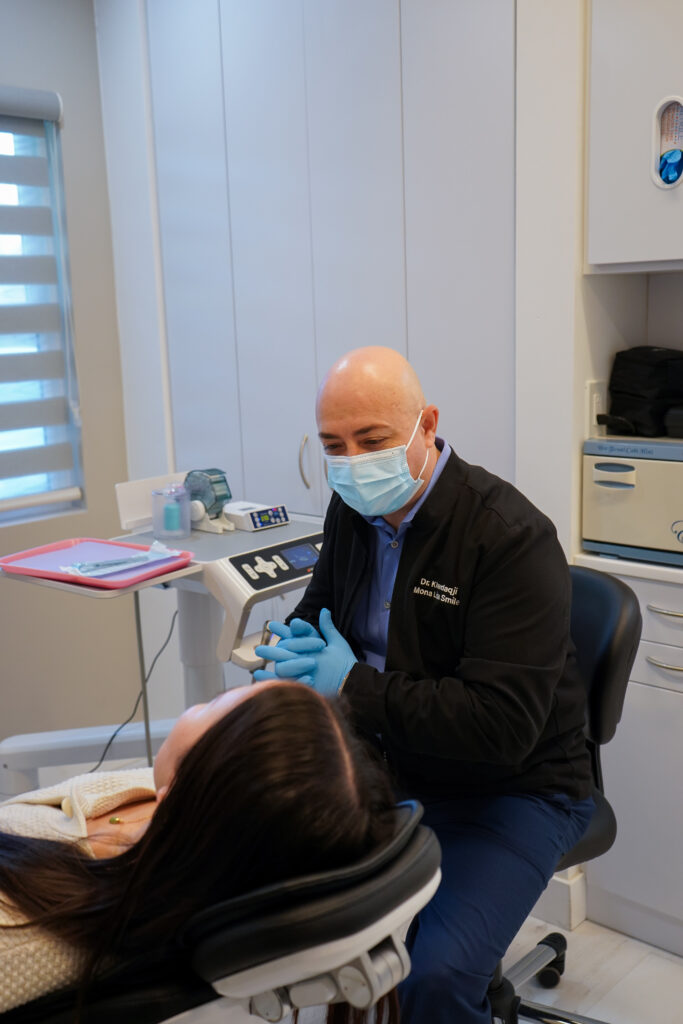
Tooth pain hits different. That sharp, throbbing ache that won’t quit — it’s usually telling you something’s going on deeper than the surface. Endodontics is the branch of dentistry that deals with the dental pulp, which is the living tissue packed inside every tooth. We’re talking nerves, blood vessels, connective tissue. The stuff that keeps your tooth alive. At Mona Lisa Smile Dental, we handle endodontic care right here in Walnut Creek, so you don’t have to get bounced around to a specialist across town.
Dr. Mohammad Khandaqji, DDS, has been practicing in Walnut Creek since 1997. That’s over 25 years and thousands of endodontic procedures — everything from a simple single-canal root canal to tricky apicoectomies on multi-rooted molars. Why does that matter? Because endodontic work lives and dies on precision. You’ve got to identify the canal anatomy correctly, clean out every bit of infected tissue, and seal things up tight. Honestly, those are skills you can only sharpen through decades of hands-on clinical work.
Our office at 2079 Olympic Blvd has cone beam 3D dental imaging (CBCT). It gives us sub-millimeter detail of root canal shapes, infections at the root tip, and nearby structures like the mandibular nerve canal and maxillary sinus floor. Here’s why that’s a big deal: this technology catches things that regular flat X-rays miss all the time — hidden canals, vertical root fractures, resorptive lesions. Game changer.
People in Walnut Creek tend to want to keep their natural teeth. Smart move. No implant, bridge, or denture can truly replicate the way a natural tooth feels and functions — that proprioceptive feedback, the cushioning from your periodontal ligament. It’s just not the same. So endodontic treatment, when it’s the right call, remains the gold standard for saving a tooth that’s in trouble. Take a look at our full range of dental services to see how endodontics fits into a bigger treatment picture.
- Root Canal Treatment
Root canals get a bad rap. But here’s the truth — the procedure itself has an evidence-based success rate north of 95% when it’s done right with modern tools. You need one when the pulp inside your tooth becomes irreversibly inflamed (that’s called irreversible pulpitis) or dies off completely. Deep cavities, repeated work on the same tooth, cracks, trauma — any of these can push things to that point.
How We Perform Root Canal Treatment
irst things first: we get you numb. Completely numb. We’ve got nitrous oxide and oral sedation options too, especially if dental anxiety is something you deal with. Once you can’t feel a thing, we isolate the tooth with a rubber dam — it keeps the area sterile and blocks bacteria from your saliva from getting into the work zone.
Dr. Khandaqji uses our CBCT scans like a roadmap. He creates an access opening through the crown to reach the pulp chamber, then uses rotary nickel-titanium files to clean and shape each canal. The goal? Remove all the infected or dead tissue while keeping as much healthy dentin intact as possible. Between each pass of the files, we flush the canal system with sodium hypochlorite and EDTA — that dissolves organic gunk and breaks up bacterial biofilm hiding in there.
Once the canals are clean and shaped, they get dried and filled with gutta-percha (a biocompatible thermoplastic material) and sealed with bioceramic sealer. Think of it as creating a three-dimensional plug that locks bacteria out for good. Most of the time, we’ll place a fiber post and recommend a dental crown afterward — that protects the tooth from cracking under the pressure of biting and chewing.
Signs You May Need a Root Canal
- Spontaneous, lingering pain that wakes you at night or sticks around long after hot/cold stuff is removed
- Darkening or discoloration of a single tooth — a telltale sign of pulp necrosis
- Swelling or a “pimple” (sinus tract) on the gum near the problem tooth
- Pain on biting or percussion, which points to periapical inflammation
- Deep decay visible on X-ray reaching into or close to the pulp chamber
Sound familiar? Don’t wait on it. Seriously. Putting off treatment gives the infection room to spread into the bone around the root tip. That can lead to an abscess, cellulitis, or losing the tooth entirely. And if language is a concern — our team speaks English, Spanish, Farsi, and Arabic, so we’ll make sure you understand every step of what’s happening.
- Apicoectomy
Sometimes a root canal doesn’t fully solve the problem. It’s uncommon, but it happens. An apicoectomy — also called endodontic microsurgery or root-end resection — is a surgical procedure we turn to when a persistent infection at the root tip won’t clear up after conventional treatment. Retreating the root canal through the crown is usually the first thing we’d consider, but certain situations make an apicoectomy the smarter, more predictable path.
When Is an Apicoectomy Indicated?
The most frequent reason? A stubborn infection at the root tip that shows up on imaging even though the original root canal looks technically solid. Complex anatomy at the apex — lateral canals, apical deltas, tiny isthmuses — can shelter bacteria that files and irrigation just can’t reach. Other situations where we’d recommend this procedure:
- Calcified or blocked canals making it impossible to retreat from the top down
- Posts or core buildups cemented in place that can’t come out safely without risking a root fracture
- Root-end resorption that’s compromised the seal at the tip
- A biopsy is needed on the periapical tissue to rule out cysts or something more concerning
- Perforations or complications left over from a previous root canal attempt
The Apicoectomy Procedure at Our Office
Dr. Khandaqji uses microsurgical techniques that have completely transformed outcomes compared to the old-school approach. After local anesthesia — and sedation if you’d like it — he reflects a small mucoperiosteal flap to uncover the bone over the root tip. A tiny window gets opened in the cortical bone using a surgical handpiece with plenty of irrigation to keep things cool.
Here’s the key part. The last 3 millimeters of the root tip are removed at a near-perpendicular angle. That section is where the most complex anatomy lives, and it’s where residual bacteria love to hide. The cut surface gets inspected under magnification, then a retrograde preparation is made with ultrasonic tips. We seal it with a biocompatible material — usually mineral trioxide aggregate (MTA) or Biodentine — to lock that root end shut.
After that, the site gets cleaned up, the flap goes back into position, sutures go in, and we take a radiograph to confirm everything looks right. Healing takes about 6 to 12 months, and we monitor it with periodic X-rays. Published success rates for microsurgical apicoectomy? Between 90% and 97%. Those are excellent odds for saving a tooth.
One more thing — because our practice also handles bone grafting and soft tissue gum grafting, we can repair any bony defects we find during the apicoectomy right then and there. Same visit. That’s a real advantage of having multi-specialty capabilities all in one place.
How Often Should I See a Dentist in Walnut Creek?
You’ve probably heard “every six months” your whole life. And that’s a solid baseline for most people. But the honest answer? It depends on you. If you’ve got active periodontal disease, a history of lots of cavities, or a condition like diabetes — coming in every three to four months makes more sense. On the flip side, someone with great oral health and low risk might be fine stretching to once a year (though that’s pretty rare, truth be told).
We use periodic oral examinations and digital dental X-rays to figure out the right schedule for each patient at Mona Lisa Smile Dental. Here’s something worth knowing about Walnut Creek — the median age here is around 42. That means a lot of our patients are hitting the years when cumulative wear, gum recession, and old dental work start needing attention. Catching those issues early through regular monitoring is way cheaper and way less invasive than scrambling to fix them later.
We also do oral cancer screening at every exam. Early detection makes a massive difference — five-year survival rates jump above 80% when it’s caught in the early stages.
Does Mona Lisa Smile Dental Accept Walk-Ins or Same-Day Appointments?
We do our best to fit same-day appointments in, especially for emergencies. Severe toothache, a knocked-out tooth, a cracked tooth, an abscess that needs draining — those can’t wait. Our emergency dental services are built around getting you triaged and out of pain fast, often in that very same visit.
For non-emergency stuff, booking ahead is the way to go. It lets us set aside the right amount of time for whatever you need. But look — we get it. Life in Walnut Creek moves fast, and plans change. Give us a call in the morning and there’s a good chance we can squeeze you in that day depending on what’s open.
And here’s something that sets us apart from a lot of practices around here: we offer Saturday appointments from 9 a.m. to 6 p.m. by request. Whether you’re working near Broadway Plaza, commuting to San Francisco on BART, or juggling a packed family calendar — Saturday availability means you can actually take care of your teeth without burning a vacation day.
Parking Available Near the Dental Office on Olympic Blvd in Walnut Creek?
Yes — and we planned it that way. Our office at 2079 Olympic Blvd in Walnut Creek has convenient parking right at the building. If you’ve ever tried to park near downtown Walnut Creek — especially around Ygnacio Valley Road and N. Main Street — you know it can be a headache. We picked this location specifically so parking wouldn’t be one more thing you have to stress about.
The Olympic Blvd spot sits outside the worst of the downtown congestion, so getting here feels a lot more relaxed. Ground-level access is a plus for patients with mobility issues, folks in wheelchairs, and parents wrangling little ones. Got specific accessibility needs? Just let our front desk team know ahead of time and we’ll make sure everything’s ready for you.
What Should I Do If I Have a Dental Emergency in Walnut Creek?
Dental emergencies are stressful. No way around that. But knowing what to do — before you’re panicking — can make a real difference. Here’s what we recommend based on the situations we see most often:
- Severe toothache: Rinse with warm salt water, take over-the-counter ibuprofen (skip the aspirin — it can make bleeding worse), and call us right away. Persistent throbbing pain usually means the pulp is involved and you’re looking at an emergency root canal.
- Knocked-out tooth: Only touch it by the crown. Never the root. Try to gently push it back into the socket if you can. If that’s not happening, drop it in milk or saline and get to our office within 30 minutes. After 60 minutes, the chances of saving it drop fast.
- Cracked or broken tooth: Rinse your mouth out, hold a cold compress against the area, and save any pieces. Treatment could be anything from cosmetic dental bonding to a crown — or an extraction, depending on how the fracture looks.
- Abscess or gum swelling: Do not try to drain it yourself. Please. An untreated dental abscess can spread to fascial spaces in your head and neck, and that can become life-threatening. We provide same-day abscess drainage and gum swelling treatment.
Frequently Asked Questions:
How often should I see a dentist in Walnut Creek?
The standard recommendation is every six months for a dental exam and professional cleaning, but the appropriate interval depends on your individual risk profile. Patients with active periodontal disease, frequent caries, or systemic conditions like diabetes may benefit from visits every three to four months. At Mona Lisa Smile Dental, we use periodic oral examinations and digital X-rays to establish a personalized recall schedule.
Does Mona Lisa Smile Dental accept walk-ins or same-day appointments?
We accommodate same-day appointments whenever possible, particularly for dental emergencies such as severe toothaches, knocked-out teeth, and abscesses. For non-emergency care, we recommend scheduling in advance. We also offer Saturday appointments from 9 a.m. to 6 p.m. by request.
Is parking available near the dental office on Olympic Blvd in Walnut Creek?
Yes. Our office at 2079 Olympic Blvd in Walnut Creek offers convenient parking directly accessible from the building. The location sits outside the most congested downtown zones, providing a more relaxed arrival experience with ground-level access for patients with mobility limitations.
What should I do if I have a dental emergency in Walnut Creek?
Call Mona Lisa Smile Dental as your first step. For a severe toothache, rinse with warm salt water and take ibuprofen. For a knocked-out tooth, handle it by the crown, place it in milk, and get to our office within 30 minutes. For an abscess, do not attempt to drain it yourself. We provide same-day emergency dental services including extractions, root canals, and abscess drainage.
Does Walnut Creek's water supply have fluoride, and does it affect my dental care?
Yes. Walnut Creek’s water is supplied by EBMUD, which has fluoridated its water since 2005 at approximately 0.7 ppm. Community water fluoridation reduces tooth decay by about 25%. We supplement this with professional fluoride treatments during hygiene appointments, particularly for children, patients with dry mouth, and those undergoing orthodontic treatment.
What is the difference between endodontics and a regular tooth filling?
A dental filling addresses damage confined to the outer structures of the tooth—enamel and dentin. Endodontic treatment becomes necessary when decay or infection has reached the pulp tissue inside the tooth. The pulp must be accessed, cleaned, disinfected, and sealed. Early detection through regular exams and X-rays frequently allows treatment at the filling stage before endodontic intervention is needed.
Your Local Endodontist in Walnut Creek, CA
When tooth pain takes over, you deserve care that’s prompt, compassionate, and effective. If you’re searching for an endodontist in Walnut Creek, or a dentist who provides root canals, apicoectomies, and advanced infection treatment, we’re here to help.
Our office is conveniently located near Walnut Creek BART, Broadway Plaza, and surrounding neighborhoods. You can call, text, or schedule online anytime. We’ll help stop the pain, protect your tooth, and get you back to living comfortably again.
Contact Us
Whether you have a question about your insurance or need to schedule an urgent appointment, our team is here to help. We are conveniently located in the heart of the East Bay, making it easy for families from Saranap, Castle Hill, and beyond to receive top-tier dental care.
Visit us
Walnut Creek
2079 Olympic Blvd.
Walnut Creek, CA 94595
Antioch
3701 Lone Tree Way, Suite 3A
Antioch, CA 94509
Email Us
drk@monalisasmiledental.com
Call or Text Us
925-543-0000